
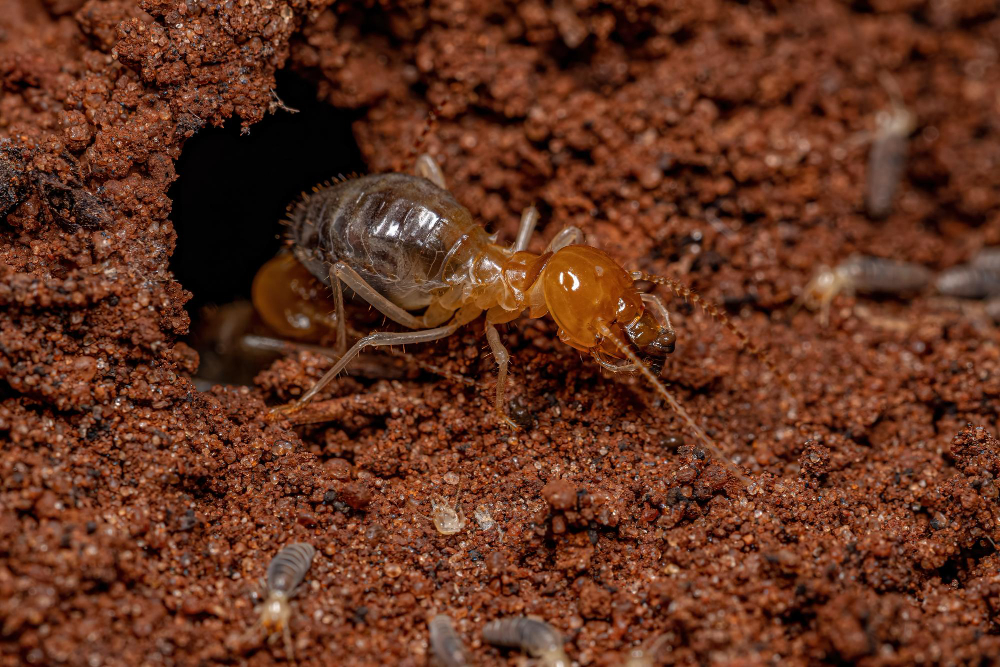
Termite control in Riverside comes down to one factor more than any other: how much contact the soil around your foundation has with moisture, and how easy that makes it for subterranean termites to reach your home. Subterranean termites, the most destructive termite species in the U.S., build their colonies underground and rely on soil contact to survive, which means irrigation habits, foundation type, and landscaping choices all shape termite risk just as much as the age of the house itself. Two homes on the same street can have very different termite exposure depending on how water moves around each foundation. Here’s what actually drives that risk, what to watch for, why annual inspections matter more here than in drier, less irrigated regions, and what a real treatment plan looks like once risk is confirmed.
Why Termite Risk Isn’t the Same on Every Property
It’s easy to think of termite risk as something tied mostly to a home’s age, and age does matter. Older homes have had more time for wood-to-soil contact, foundation cracks, or past moisture issues to develop. But age is only part of the picture. Two homes built in the same decade, on the same street, can carry very different termite risk depending on how irrigation is set up, whether sprinklers spray directly against the foundation, and how well water drains away from the structure after it’s used.
This is why a termite inspection is never just a formality. The same general regional termite pressure applies to every property in the area, but the specific risk on any one property comes down to details that are only visible on a real walk-through: moisture at the foundation, wood-to-soil contact points, and any existing damage that hasn’t been noticed yet.
Foundation type plays a role too. A raised foundation with a ventilated crawl space behaves differently than a slab foundation poured directly against the soil, and older neighborhoods often have a mix of both depending on when different phases of a development were built. None of this means one foundation type is inherently safe. It just means the specific vulnerabilities differ, which is exactly the kind of detail a generic termite article can’t account for and a real inspection can.
Subterranean Termites: The Species Behind Most Riverside Damage
Subterranean termites are the most destructive termite species in the U.S. and are capable of causing extensive structural damage in a short period of time. Unlike drywood termites, which can live entirely within a piece of wood, subterranean termites build their colonies in the soil and need consistent contact with moisture to survive. That single requirement, soil contact, is the entire reason foundation-level moisture control matters so much in termite prevention.
Because the colony lives underground, the part of the infestation that’s actually visible from inside a home is often just the tip of a much larger colony working through the soil and any wood it can reach. This is part of why termite damage can be extensive before it’s ever noticed, and why professional identification of species, life cycle, and infestation signs matters more than a quick look from someone without the training to know what they’re looking at.
How Termites Actually Reach Your Home
Subterranean termites travel from their underground colony to a food source, wood, through mud tubes: narrow tunnels made of soil, wood particles, and termite saliva that protect the termites from open air and predators while they travel. These tubes are often found along foundation walls, piers, or any spot where soil meets an exterior wall. Finding a mud tube, even an old, abandoned-looking one, is one of the more direct signs that termites have been active on a property at some point.
Because termites need that soil contact to survive, any point where wood touches soil directly, a fence post, a low deck support, siding installed too close to grade, creates a potential access point that bypasses the need for a mud tube entirely. These direct contact points are often easier for termites to exploit than building a tube up an exposed foundation wall, which is part of why landscaping and structural details around a home matter as much as the termiticide treatment itself.
It’s worth noting that a mud tube being present doesn’t necessarily mean the colony is still actively using it. Termites will abandon tubes if conditions change, if the moisture source dries up or if a treatment disrupts the colony. An old, dry, crumbling tube is still worth flagging during an inspection, since it confirms termites have had access to that specific point at some point, even if current activity needs to be separately confirmed.
Not Sure What Your Termite Risk Looks Like?
Get a free estimate and a real inspection of your foundation, moisture points, and wood-to-soil contact.
Request Your Free Estimate »Why Irrigation and Landscaping Habits Matter More Than People Think
A property’s irrigation setup has an outsized effect on termite risk simply because subterranean termites need moisture in the soil to survive. Sprinklers that spray directly against a foundation, planter beds built up against exterior walls, or mulch piled too high against siding all keep soil moisture elevated right where a home is most vulnerable. None of these are unusual landscaping choices. They’re common, and mostly harmless from a plant-care perspective. The termite risk is simply a side effect that isn’t obvious unless someone is specifically looking for it.
Reducing moisture levels near the foundation, redirecting sprinkler heads away from exterior walls, and maintaining a gap between mulch or soil and the base of the house are all part of standard termite prevention recommendations, alongside sealing cracks and crevices that could otherwise become entry points. Something as simple as adjusting a sprinkler head so it waters the lawn instead of the foundation can meaningfully reduce the moisture conditions termites are looking for, without any cost beyond the few minutes it takes to redirect it.
Signs Your Property Might Already Have a Termite Problem
A few practical signs are worth checking for directly, especially in older homes or properties with landscaping close to the foundation:
- Mud tubes running along foundation walls, piers, or crawl space supports
- Wood that sounds hollow when tapped, or that gives more than expected under light pressure
- Discarded wings near windowsills or doors, often left behind after a swarm
- Any wood, fencing, deck posts, or siding making direct contact with soil
- Sprinkler heads or irrigation lines positioned to spray directly against the foundation
None of these guarantee an active infestation on their own, but any one of them is a reasonable trigger for a professional inspection rather than waiting for damage to become visible from inside the home. Discarded wings in particular are easy to sweep away and forget about, when in reality they’re worth photographing and mentioning to a technician even if they’ve already been cleaned up by the time an inspection happens.
Why Annual Inspections Matter More in This Region
Regular termite inspections, recommended annually, are especially important in areas where irrigation keeps soil moisture elevated for a large part of the year. Early detection is what actually prevents extensive structural damage, since a colony working through foundation-adjacent wood can go unnoticed for a long time if no one is checking for the specific signs. An annual inspection catches developing mud tubes, new moisture issues, and any wood-to-soil contact points that have developed since the last visit, well before they turn into a repair bill.
A yearly cadence also lines up well with how landscaping and irrigation setups tend to change over time. A sprinkler head that got bumped out of alignment, a new planter bed installed against a wall, or a fence repair that left a post in direct soil contact can all shift a property’s risk profile within a single year. An inspection schedule that only happens every few years, or not at all until something looks wrong, misses that window entirely.
What a Real Termite Treatment Plan Includes
A proper termite program combines several strategies rather than relying on a single method:
- Professional inspection and identification to confirm the species and understand the extent of any existing activity
- Liquid termiticides applied around the foundation, along with termite baits designed to target the colony directly
- Physical barriers and moisture reduction recommendations to address the conditions that let termites reach the structure in the first place
- Fumigation or heat treatment for more severe, established infestations
- Ongoing monitoring and routine inspections to catch any new activity early
Most treatments are safe for pets and children once dried, which matters for families who want effective treatment without needing to significantly disrupt their routine around the home. Because subterranean termite colonies live underground and can be extensive, a treatment plan built around several of these strategies together tends to hold up better over time than relying on baiting alone or a single perimeter application without any follow-up monitoring.
How Akela Approaches Termite Control
We bring state-of-the-art technology together with a deep understanding of termite behavior, using an integrated pest management approach that combines bait systems, soil treatments, and physical barriers rather than relying on one method alone. Every visit starts with a thorough inspection using specialized equipment to treat infestations at the source, not just the visible signs. Emergency termite services are available, and every estimate is free before any work begins.
Because moisture and irrigation habits play such a large role in termite risk, our inspections often flag the same conditions that matter for other pests too. A property with consistent moisture near the foundation is sometimes also a candidate for a look at cockroach activity drawn to the same damp conditions, since both issues tend to share a root cause. Catching both during a single visit tends to save a property owner from scheduling two separate inspections for what turns out to be one underlying moisture problem.
See Our Full Termite Control Services
Get a free estimate and a real inspection tailored to your property’s specific risk factors.
See Termite Control »Termite risk isn’t the same for every property, even on the same block. Soil moisture, irrigation habits, and wood-to-soil contact points do more to determine risk than most homeowners realize, and a proper inspection is what actually turns that uncertainty into a clear answer, rather than a guess based on the age of the house alone.
Frequently Asked Questions
Why does soil moisture matter so much for termite risk?
Subterranean termites, the most common and destructive species in this region, build their colonies underground and need consistent soil moisture to survive. Anything that keeps soil near the foundation consistently damp, like sprinklers spraying against a wall, increases the risk of termite activity in that area.
What are mud tubes, and why do they matter?
Mud tubes are narrow tunnels subterranean termites build out of soil, wood particles, and saliva to travel safely from their underground colony to a wood source. Finding a mud tube along a foundation wall is one of the more direct signs that termites have been active on a property.
How often should a property actually get inspected for termites?
Annual inspections are generally recommended, and that’s especially true on properties where irrigation keeps soil moisture elevated for a large part of the year. Early detection is what prevents a colony from causing extensive structural damage before anyone notices.
What determines the cost of termite treatment?
Cost depends on the extent of the infestation, which treatment methods are needed, whether the situation calls for liquid termiticide and baiting versus fumigation or heat treatment for a more severe case, and the size of the property being treated. A professional inspection is what determines which of those apply.
Can I prevent termites just by managing my irrigation?
Reducing moisture near the foundation helps significantly, but it’s one part of a full prevention approach. Sealing cracks and crevices, maintaining a gap between soil or mulch and the base of the house, and getting regular inspections all work together with moisture management to reduce risk.