
Waking up with new bites is enough to send most people straight to a search bar, and bed bug bite pest control questions almost always start with the same photo comparison: mosquito bite versus bed bug bite. The honest answer is that bite appearance alone is one of the least reliable ways to tell them apart. Both show up as raised, itchy bumps, and individual reactions vary enough from person to person that the same bite pattern can look completely different on two people. What actually matters more is pattern, timing, and location, plus the physical signs bed bugs leave behind that mosquitoes never do. Here’s how to read the real clues instead of just staring at a bite and guessing.
Why Bite Pattern Alone Won’t Tell You What Bit You
It’s tempting to zoom in on a bite and try to diagnose the culprit from the shape alone. In practice, that approach fails more often than it works, because individual skin reactions vary so much. Some people barely react to a bed bug bite at all, while others develop a significant welt from a single mosquito bite. Redness, swelling, and itch intensity say more about a person’s individual sensitivity than about which pest caused the bite.
What holds up better than staring at a single bite is looking at the overall pattern, where the bites showed up, when they appeared, and whether there’s any physical evidence beyond the bites themselves. That combination is a far more reliable read than any single bite in isolation.
Timing during the night matters too, though it’s rarely something people think to track. Bed bugs feed while a person is asleep and still, typically in the early morning hours before waking, while mosquitoes bite whenever exposed skin is available and the insect is active, which in Riverside means primarily dawn, dusk, or indoors any time a mosquito has gotten inside. New bites that appear specifically after a night’s sleep, with no clear memory of being bitten while awake, lean the conversation toward bed bugs rather than mosquitoes.
What a Bed Bug Bite Actually Looks Like
Bed bug bites often appear in clusters or a zigzag pattern, which reflects how a bed bug feeds. Rather than biting once and moving on, a bed bug will often bite several times in a short line or cluster as it searches for a reachable blood vessel, since it doesn’t inject an anesthetic strong enough to guarantee an undisturbed feeding in one spot. This clustered or zigzag arrangement, especially in a row along an arm, leg, or other area exposed while sleeping, is one of the more distinguishing patterns associated with bed bugs specifically.
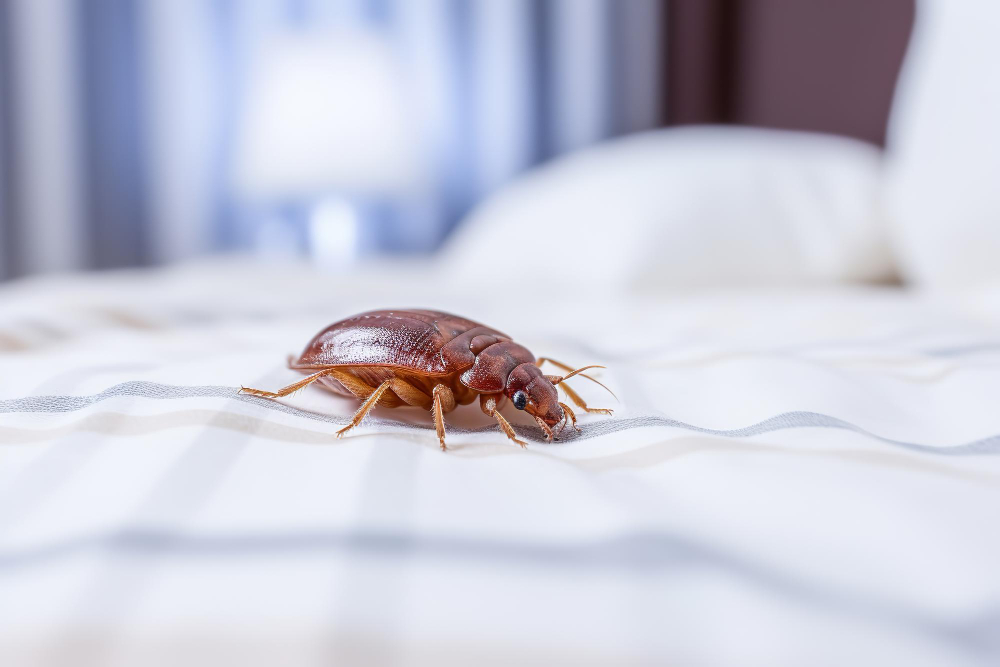
Beyond the bite pattern, bed bugs themselves are reddish-brown, oval-shaped, and about 4 to 5 millimeters in size, roughly the size of an apple seed. They hide in the seams of mattresses, box springs, headboards, and nearby furniture, which is worth knowing because finding an actual bug, even one, is a far more reliable sign than any bite pattern. A lot of people search for bites online before ever thinking to check the mattress seams directly, when the seams themselves are often the faster way to get an answer.
What a Mosquito Bite Actually Looks Like
Mosquito bites tend to show up as individual, isolated bumps rather than the clustered lines associated with bed bugs. They typically appear on skin that was exposed at the time, which lines up with mosquitoes being most active at dawn and dusk, as well as with daytime-biting species like the Asian tiger mosquito. A single mosquito bite is usually the result of one feeding event, which is part of why the bites tend to scatter randomly across exposed skin rather than clustering in a tight line.
Since mosquitoes are drawn to standing water, warm weather, and the carbon dioxide, body heat, and sweat given off by people nearby, mosquito bites tend to track with time spent outdoors, especially around dawn, dusk, or near a yard with standing water. Bed bug bites, by contrast, tend to appear after time spent in bed or upholstered furniture, regardless of the time of day.
Location on the body is a useful secondary clue as well. Mosquito bites tend to concentrate on whatever skin was actually exposed at the time, ankles and ears if someone was outside in shorts in the evening, or arms and hands if that’s what wasn’t covered. Bed bug bites are less tied to what was exposed and more tied to what touched the mattress or furniture directly, which is why they often show up on shoulders, backs, and arms regardless of what someone was wearing to bed.
The Zigzag Clue (and Why It’s Not Foolproof)
The clustered or zigzag bite pattern gets cited constantly as the bed bug tell, and it’s a genuinely useful clue, but it isn’t foolproof on its own. Some bed bug bites appear as isolated single bites, particularly with light infestations or in people whose bodies don’t react strongly. On the flip side, a person swatting at mosquitoes in the same spot repeatedly over an evening can end up with a loose cluster of bites that looks pattern-like without actually being one.
This is exactly why bite pattern works better as one data point among several rather than a standalone diagnosis. Combined with timing, location, and physical evidence, it becomes a lot more useful than it is by itself. Treating it as the single deciding factor is where a lot of people go wrong, either dismissing a real bed bug problem because one bite looked isolated, or panicking over a random mosquito cluster that isn’t actually a pattern at all.
Not Sure What’s Biting You at Night?
Get a free estimate and a real inspection to identify the source, not just a guess from a photo.
Request Your Free Estimate »Other Signs That Point to Bed Bugs Specifically
Beyond the bite pattern itself, a handful of physical signs are much more reliable indicators of a bed bug problem than the bites alone:
- Dark fecal spots resembling small ink stains on sheets, mattress seams, or nearby furniture
- Rusty-colored blood stains on sheets, often from a bug being crushed during sleep
- Light brown, translucent shed skins left behind as bed bugs grow through their life stages
- A musty, sweet odor in cases of a more established infestation
- Actual physical sightings of the bugs themselves in mattress seams, box spring corners, or headboard joints
Any one of these alongside a clustered bite pattern is a much stronger indicator than the bites on their own. None of these signs show up with a mosquito problem, which is part of what makes them useful for narrowing things down.
Why “It’s Probably Just Mosquitoes” Is a Risky Assumption
Bed bugs are not transmitted through poor hygiene, and they’re not something that only happens in certain kinds of homes. They’re attracted to warmth, carbon dioxide, and blood, which means any home is a candidate. Bed bugs also multiply rapidly and can quickly overrun a home once established, which is exactly why an incorrect assumption that new bites are “probably just mosquitoes” can cost valuable time. DIY methods provide only temporary relief against bed bugs, since it’s easy to miss a hiding spot in a mattress seam or furniture joint, and professional treatment is necessary to fully eradicate an infestation at every life stage, not just the bugs visible at the time of treatment.
The cost of guessing wrong here isn’t symmetrical. Assuming mosquitoes when it’s actually bed bugs gives an established infestation more time to grow. Assuming bed bugs when it’s actually mosquitoes usually just means an unnecessary inspection. That asymmetry is a good reason to lean toward getting a professional opinion when the pattern is genuinely unclear.
There’s also a seasonal wrinkle worth mentioning. Mosquito bites are easy to write off as expected during the warmer months, since mosquito activity in Riverside runs from roughly April through October. That seasonal familiarity is exactly what makes it easy to keep assuming mosquitoes are the cause even after a pattern shifts toward something else, especially if the new bites started appearing indoors rather than after time spent outside.
What a Bed Bug Inspection Actually Involves
A proper bed bug inspection targets all stages of the pest life cycle, not just visible adult bugs. Our approach typically includes a property inspection to identify physical signs of bed bugs and locate nests, followed by an integrated pest management approach combining non-chemical techniques, barriers, traps, and specialized vacuum removal, with minimally toxic, environmentally-friendly pesticides applied with precision where needed. This combination is what actually addresses an infestation at every life stage, from egg to adult, rather than knocking down only what’s visible on the surface.
Because bed bugs can travel between units in multifamily housing and hide in luggage, furniture, and secondhand items, a thorough inspection often extends beyond just the bed itself, checking nearby furniture, baseboards, and any recently acquired items that could have introduced bed bugs into the home in the first place.
How Akela Approaches Bed Bug Control
Our technicians are trained specifically to detect and eradicate bed bugs, and every visit starts with identifying the actual signs of an infestation rather than assuming based on bite pattern alone. We take an environmentally conscious approach that addresses the underlying conditions attracting bed bugs while minimizing risk to people and pets, and every estimate is free before any work begins. Emergency services are available, since bed bug problems tend to get more difficult to fully resolve the longer they’re left untreated.
If bed bugs turn out not to be the issue, the same inspection is a useful opportunity to rule out other possibilities, including a look at whether mosquito activity around the property is the more likely explanation, or whether another pest entirely is responsible. That kind of process of elimination tends to get a homeowner to a real answer faster than a few more nights of comparing bite photos online.
Get $150 Off Your First Service
New customers save $150 on their initial bed bug pest control visit. No contracts required, ever.
See Bed Bug Control »A bite is a clue, not a diagnosis. Pattern, location, timing, and physical evidence together tell a much clearer story than any single bite ever could, and getting that story right early is what keeps a small, manageable problem from turning into a much bigger one.
Frequently Asked Questions
Can I tell the difference between bed bug bites and mosquito bites just by looking at them?
Not reliably on their own. Individual skin reactions vary enough that the same bite pattern can look completely different from person to person. Pattern, location, timing, and physical evidence together are a much more reliable read than any single bite.
Why do bed bug bites often appear in a line or cluster?
Bed bugs often bite several times in a short line or cluster as they search for a reachable blood vessel during a single feeding. This zigzag or clustered pattern is a useful clue, though it isn’t foolproof, since some bed bug bites appear as isolated single bites.
What’s the most reliable sign of a bed bug infestation?
Physical evidence beyond the bites themselves tends to be more reliable, including dark fecal spots resembling ink stains, rusty blood stains on sheets, shed skins, or an actual sighting of a bug in a mattress seam or furniture joint.
Are bed bugs a sign that a home isn’t clean?
No. Bed bugs are not transmitted through poor hygiene. They’re attracted to warmth, carbon dioxide, and blood, which means any home can be affected regardless of how clean it is.
Why shouldn’t I just try a DIY bed bug treatment first?
DIY methods tend to provide only temporary relief because it’s easy to miss a hiding spot in a mattress seam or furniture joint. Bed bugs multiply rapidly, so professional treatment targeting every life stage is what actually resolves an infestation rather than just knocking back what’s visible.