
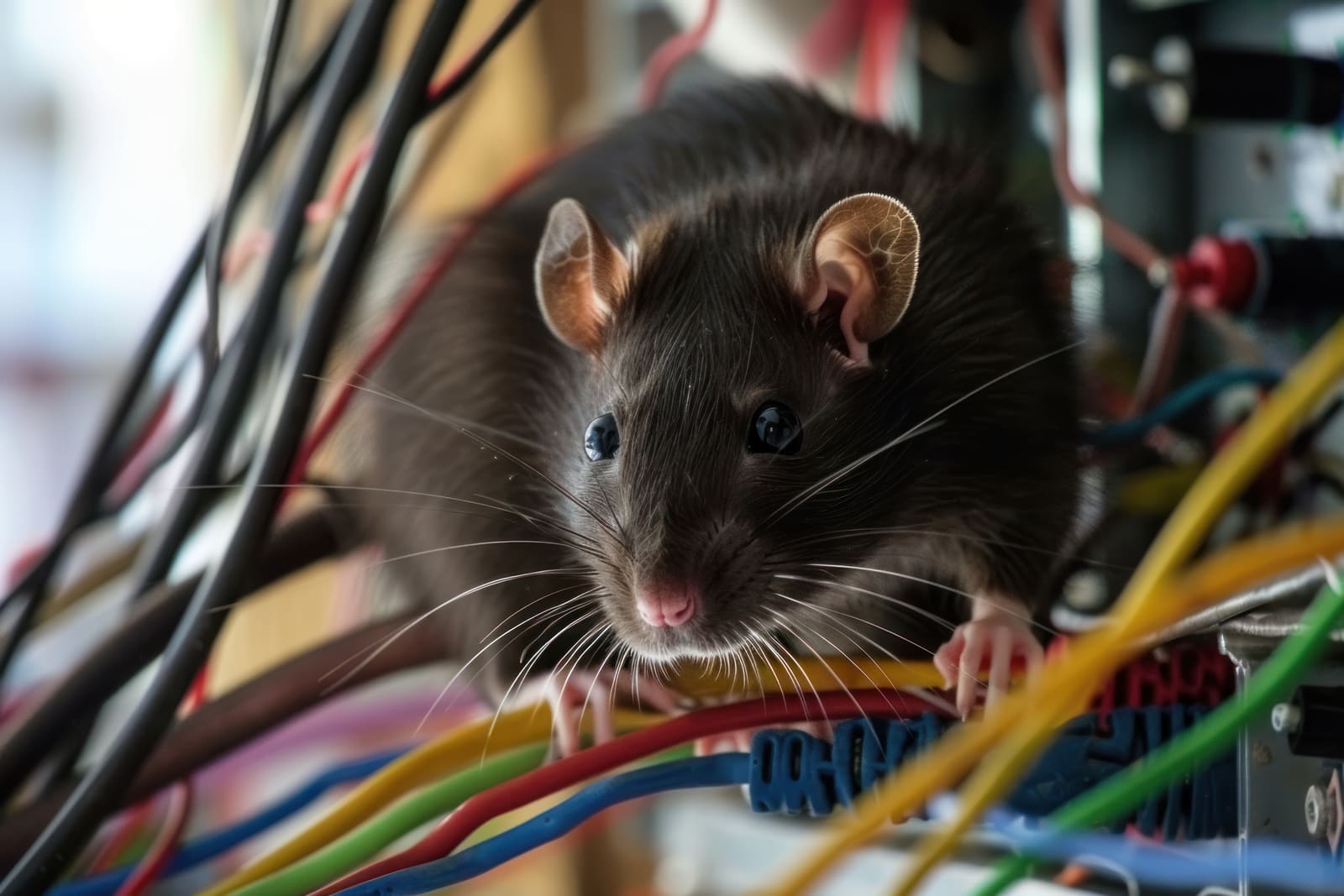
Squirrels gnawing attic wiring is one of the more overlooked fire risks tied to a wildlife problem, and it’s worth taking seriously the first time a chewing or scratching sound shows up overhead. Squirrels have front incisors that never stop growing, so they gnaw constantly to keep them worn down, and once a squirrel has moved into an attic, exposed electrical wiring is one of the most common things it targets. A chewed wire in a wall void or attic space can spark, and with insulation and stored boxes sitting right next to it, that is exactly the kind of setup that leads to a house fire. This is different from most nuisance wildlife control situations, where the main concern is property damage and mess rather than an actual ignition source hiding overhead. Here is why squirrels chew wiring specifically, what the real fire risk looks like, how to tell an established squirrel presence from a passing visitor, and why removal alone is never the complete fix.
Why Squirrels Chew Wiring in the First Place
A squirrel’s front incisors grow continuously throughout its life, and if they are not worn down through regular gnawing, they can overgrow to the point of interfering with the animal’s ability to eat at all. This biological reality means a squirrel that has taken up residence in an attic is not chewing out of aggression or curiosity. It is a constant, involuntary behavior that targets whatever hard material happens to be within reach, wood framing, insulation backing, plastic, and electrical wiring included.
Attics offer an unusually convenient combination of conditions for this behavior: dry, sheltered space, minimal disturbance, and easy access to exactly the kind of material squirrels are drawn to gnaw on. A squirrel does not need to specifically seek out wiring to damage it. It only needs to be present in a space where wiring happens to be one of the available surfaces, which is essentially every modern attic.
Squirrels typically move indoors, or up into a roofline, when they are looking for a safe place to nest and raise young, most commonly in the fall as temperatures start to drop, or in early spring during breeding season. A mature attic, especially one with older insulation and established gaps around vents or fascia boards, offers exactly the kind of quiet, temperature-stable environment a squirrel is looking for, which is why the same attic can end up hosting multiple generations if the original entry point is never sealed.
The Real Fire Hazard Behind the Sound
Chewed insulation on an electrical wire exposes the bare conductor underneath, and a bare wire making contact with another wire, a metal surface, or simply arcing in a dry, cluttered attic space is a legitimate ignition source. Attics are particularly poor environments for this kind of exposure, since they are typically full of dry insulation, cardboard storage boxes, and wood framing, all material that can catch quickly if a spark does occur.
This risk is compounded by the fact that damaged wiring in an attic is largely invisible day to day. Unlike a frayed extension cord in a living room that someone would notice and replace, wiring damage overhead can persist for months without any visible sign from inside the living space, right up until it causes a problem. A homeowner who hears occasional scratching and assumes it is “just squirrels being squirrels” is often unknowingly living with an active fire risk overhead that grows more likely to cause damage the longer the squirrels stay in place.
The risk is not limited to wiring that squirrels chew directly, either. Squirrels moving through tight spaces in an attic can dislodge wiring that was previously intact, pulling a connection loose or exposing a splice that was otherwise properly insulated. Nesting material built from shredded insulation piled directly against a junction box or a section of wiring adds another layer of risk, since that material is exactly the kind of dry, combustible fuel that turns a small spark into a larger fire. None of this requires a large squirrel population. A single animal establishing a nest in the wrong spot is enough to create a meaningful hazard over time.
Signs Squirrels Have Actually Moved In
A squirrel passing through a yard is common and not cause for concern on its own. Squirrels that have actually taken up residence in an attic leave more specific signs. Scratching, scurrying, or rolling sounds directly overhead, particularly in the early morning and around dusk when squirrels are most active, are usually the first thing a homeowner notices. Because squirrels are active during the day rather than at night, this timing pattern is a useful way to distinguish squirrel activity from a nocturnal pest like a rat, which tends to be most active after dark.
Visible entry points are another sign worth checking from outside: a gap where a roofline meets a fascia board, a torn vent screen, or a gap around where a utility line penetrates the roof are all common ways squirrels get into an attic space in the first place. Chewed damage to stored items, insulation displaced from its original position, and accumulated nesting material, leaves, shredded insulation, fabric, bundled into a corner of the attic, all point toward an established presence rather than a one-time visitor passing along the roofline.
Mature landscaping is often part of the picture here too. Established trees with branches overhanging a roofline give squirrels an elevated path directly onto a structure that a newer property with younger, smaller landscaping typically doesn’t offer yet. A property with a large, mature oak or pine positioned close to the roofline is statistically more likely to see squirrel activity than a similar home with landscaping set further back, simply because the animal never needs to touch the ground to reach the attic in the first place.
Hearing Scratching Overhead?
Get a free inspection before assuming it’s nothing to worry about.
Request a Free Inspection »Why Removal Alone Isn’t the Complete Fix
Removing the squirrels currently in an attic addresses the immediate problem, but it does nothing about the entry point that let them in in the first place. A vacated attic with an open gap along the roofline is simply an invitation for the next squirrel, or a different species entirely, to move in and start the same cycle over again. This is why humane exclusion, physically sealing the entry points once the current occupants have been safely removed, matters just as much as the removal itself.
Exclusion timing also needs to account for whether young are present. Removing an adult squirrel while leaving dependent young behind in the attic creates both a welfare problem and a practical one, since the young will continue making noise and causing damage even after the adult is gone. A responsible approach confirms whether a nest includes young before finalizing an exclusion plan, and times the work accordingly rather than sealing an entry point that traps animals inside.
Beyond the immediate entry point, an exclusion job typically involves reinforcing vulnerable spots that a squirrel could exploit again in the future: fitting a proper screen over roof and gable vents, repairing gaps around fascia boards where a roofline has settled or warped slightly over the years, and checking that any utility line penetrations through the roof are properly sealed. A thorough exclusion job treats the entire roofline as a system rather than patching a single hole and hoping nothing else gives way later.
Squirrels Are Rarely the Only Attic Concern
An attic that has hosted one wildlife intrusion is often a candidate for others, since the same gaps and access points that let a squirrel in are frequently large enough for a variety of other animals. Roof rats are excellent climbers that invade attics and upper areas through many of the same rooflines, overhanging branches, and roof vent gaps that squirrels use, and mature landscaping with branches overhanging a roofline gives both species an elevated path directly onto a structure. Raccoons and bats can exploit similar vulnerabilities as well, particularly around eaves and larger roof gaps.
This is part of why an inspection triggered by squirrel activity is worth treating as a chance to check the whole roofline and attic access, rather than sealing a single obvious gap and assuming the problem is fully resolved. A property with mature trees close to the roofline in particular deserves a closer look, since those overhanging branches are one of the more common ways multiple wildlife species end up finding their way into the same attic over time.
It’s also worth noting that different species leave slightly different signs even when using similar entry points. Roof rat activity tends to produce more gnaw damage concentrated around food storage and stored boxes in addition to wiring, while a squirrel’s damage skews more toward structural gnawing and nesting material. A technician trained to recognize these distinctions can often tell which species is actually present just from the pattern of damage, well before any animal is directly observed.
How Akela Approaches Wildlife Control
Our expert team is trained to handle wildlife intrusions of all kinds, whether it’s squirrels gnawing on electrical cables, raccoons nesting in an attic, or another animal causing damage to a home or business. We use a humane approach that prioritizes the well-being of both people and the animals involved, backed by identification of exactly how an animal is getting in before any exclusion work begins. Every estimate is free, and there are no contracts required, ever, and emergency service is available for a wiring concern that can’t reasonably wait for the next scheduled opening.
Because attic access points that let in squirrels can also let in other pests, an inspection triggered by squirrel activity is also a useful opportunity to check for rodent activity using the same rooflines and gaps, since roof rats in particular favor many of the same access points and elevated travel paths that squirrels rely on. Confirming both at once, rather than treating them as separate calls months apart, tends to save a property owner both time and money.
See Our Full Wildlife Control Services
Get a free estimate and a real inspection of your roofline and attic access points.
See Wildlife Control »A chewing sound in the attic is easy to dismiss as background noise, but the fire risk behind chewed wiring is real, and it grows the longer squirrels stay in place. Identifying the entry point, removing the current occupants humanely, and sealing the access for good is what actually resolves the problem, rather than a single trip to knock down the noise and hope it doesn’t come back on its own once the weather turns again next season.
Frequently Asked Questions
Why do squirrels chew on electrical wiring specifically?
Squirrels have front incisors that grow continuously, so they gnaw constantly to keep them worn down. Wiring is simply one of the available materials within reach once a squirrel has taken up residence in an attic.
Is squirrel activity in the attic actually a fire risk?
Yes. Chewed insulation exposes bare wire, and a spark in a dry attic full of insulation and stored boxes is a legitimate ignition source, especially since the damage is usually invisible from inside the living space until a problem occurs.
How can I tell squirrels are in my attic versus just passing through?
Scratching or scurrying sounds during the day, particularly early morning and dusk, along with visible entry points, displaced insulation, and nesting material, all point toward an established presence rather than a one-time visitor.
Is removing the squirrels enough to solve the problem?
No. Removal addresses the current occupants, but the entry point that let them in remains open unless it’s sealed through proper exclusion work, which is why exclusion matters as much as removal itself.
Could other animals be using the same entry points as squirrels?
Yes. Roof rats, raccoons, and bats often exploit similar gaps around rooflines and eaves, which is why an inspection triggered by squirrel activity is a good opportunity to check the whole attic access, not just the obvious entry point.