
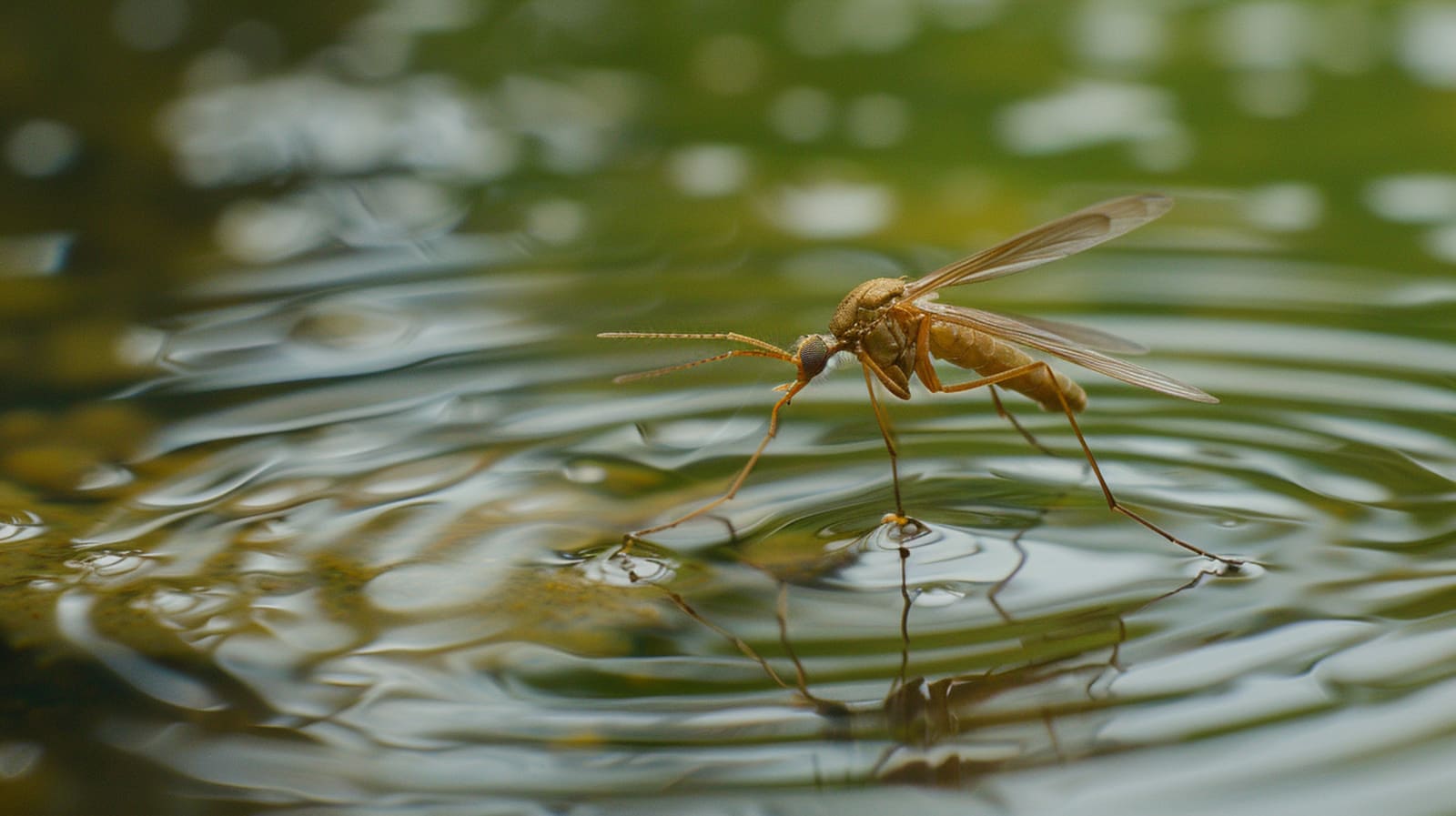
Mosquito control in Riverside CA has to account for something a lot of nearby inland cities don’t deal with to the same degree: proximity to the Santa Ana River bottom. Properties closer to the river bottom, the irrigation canals that feed off it, and the citrus groves that still rely on flood-style irrigation tend to see a longer, heavier mosquito season than drier, less irrigated parts of the Inland Empire. That’s not a coincidence. Mosquitoes need standing water to breed, and a river bottom environment, even one that looks mostly dry from a distance, holds pockets of moisture and slow-moving water for a much longer stretch of the year than a typical inland yard. Here is why Riverside’s specific geography keeps mosquito pressure elevated longer than in surrounding cities, what actually changes from one part of the city to another, and what a mosquito control plan actually needs to account for here.
Why the Santa Ana River Bottom Changes the Math
A river bottom environment holds water differently than a typical residential yard. Even during Southern California’s dry months, low-lying areas near the river bottom retain pockets of slow-moving or standing water in vegetation, low spots, and drainage channels, conditions that persist well after a typical yard’s sprinkler runoff has evaporated. Mosquitoes need standing water to complete their life cycle, from egg to larva to adult, and a river bottom simply offers more consistent breeding habitat over a longer stretch of the year than a property with no natural water feature nearby.
This matters for pest pressure well beyond the immediate riverbank. Adult mosquitoes are capable of traveling a meaningful distance from their breeding site, which means a property a mile or more from the river bottom itself can still see elevated mosquito activity if it sits within that flight range during peak breeding conditions. A home right along the river’s edge deals with the most direct pressure, but the effect radiates outward across a wider area than most homeowners realize.
Vegetation density along the river bottom compounds the effect. Dense reeds, brush, and overgrown vegetation near slow-moving water don’t just provide breeding habitat, they also provide shade and shelter that helps adult mosquitoes survive the hottest part of the day, extending their active hours and overall lifespan compared to an open, sun-exposed area with less cover. A property backing directly onto this kind of dense river-bottom vegetation is dealing with both more breeding habitat and a healthier, longer-lived adult population than a property near open water with less surrounding cover.
Irrigation Canals and Citrus Groves Add to the Pressure
Riverside’s agricultural history left behind a network of irrigation canals and citrus groves that still shape the local landscape today, and both contribute to mosquito breeding conditions independent of the river bottom itself. Canals used to move water for irrigation create long stretches of slow-moving or standing water, particularly where flow is reduced or channels aren’t regularly maintained, and these stretches can function as breeding sites even when they’re not part of the river system directly.
Citrus groves that still rely on flood-style irrigation, rather than modern drip systems, periodically saturate the ground between waterings, creating temporary standing water across a wide area each time the grove is irrigated. A property adjacent to or downstream from one of these groves can see a spike in mosquito activity tied directly to the grove’s irrigation schedule, which is a source of breeding pressure that has nothing to do with anything happening on the property itself.
This creates a pattern that can be genuinely confusing for a homeowner trying to solve their own mosquito problem without understanding the broader picture. A property owner who diligently clears every bit of standing water on their own land, but still deals with heavy mosquito activity, is often dealing with breeding pressure originating from a neighboring grove’s irrigation cycle or a nearby canal segment rather than anything they’ve missed on their own property. Recognizing this distinction is important, since it changes the expectation for what source reduction alone can accomplish versus what also requires targeted outdoor treatment to manage the incoming pressure from beyond the property line itself.
Live Near the River Bottom or a Canal?
Get a free inspection focused on the breeding sites specific to your property’s location.
Request a Free Inspection »Your Own Yard Still Matters, Even With the River Bottom Nearby
None of this means a property’s own standing water is off the hook just because a larger, harder-to-control source exists nearby. Mosquitoes are drawn to standing water, warm weather, and the carbon dioxide, body heat, and sweat people give off just by being outside, and a clogged gutter, a forgotten planter saucer, or an unused kiddie pool right on the property is often a bigger, more immediate contributor to bites on that specific patio than the river bottom a mile away. Some individuals also appear to be bigger mosquito targets than others, and blood type may play a small role, but standing water remains the one variable a homeowner can actually do something about.
A single clogged gutter or an unused pool cover holding a shallow layer of water can support several generations of mosquitoes before anyone notices a problem, and this kind of close-range breeding site is exactly the piece a homeowner has direct control over, regardless of what’s happening near the river. Addressing both the property-level sources and the broader regional pressure is what actually keeps a yard usable through the warmer months, rather than fighting one battle while ignoring the other entirely.
Common overlooked sources on a typical Riverside-area property include clogged gutters holding a shallow layer of water after irrigation or a rare summer rain, forgotten saucers under potted plants, unused kiddie pools or buckets left out in a side yard, and low spots in a lawn where irrigation runoff pools rather than draining. None of these require river-bottom proximity to become a problem, which is exactly why a property owner shouldn’t assume they’re off the hook simply because they live further from the river than a neighbor down the street.
Why Mosquito Season Runs Longer Near These Areas
In drier, less irrigated parts of the Inland Empire, mosquito breeding habitat can shrink considerably once the hottest, driest stretch of summer sets in, since there’s simply less standing water available to support a large population. Properties closer to the river bottom, canals, and citrus groves don’t get that same natural dry-down, since irrigation and river-fed moisture keep at least some breeding sites active later into the season and reactivate them earlier the following year.
This translates directly into a longer practical mosquito season for these properties: activity that starts earlier in spring, persists more consistently through the hottest months rather than tapering off, and continues later into fall than a similar property without that river-adjacent geography. A pest control plan that treats every property in the region identically misses this distinction, which is exactly why understanding a property’s specific proximity to these features matters for setting realistic treatment expectations.
This is also why a homeowner near the river bottom who compares notes with a friend living in a drier, more inland part of Riverside sometimes finds their experiences don’t line up at all. The friend’s mosquito activity might taper off noticeably by late September, while a river-adjacent property is still dealing with regular evening bites well into October. Neither experience is wrong. They simply reflect two genuinely different mosquito environments existing within the same city.
Source Reduction Still Beats Spraying After the Fact
Spraying the air after mosquitoes are already active knocks down the adults buzzing around a patio, but it does nothing about the water source producing the next batch, and that gap matters even more on a property dealing with river-adjacent breeding pressure. Source reduction, meaning eliminating or treating the standing water itself rather than only the adult mosquitoes flying around it, is what actually breaks the reproductive cycle regardless of how far a property sits from the river bottom.
For a property near a canal or grove where the actual breeding site sits outside the property line, source reduction on the yard itself, clearing gutters, tipping out plant saucers, treating any water feature that can’t be drained, still meaningfully reduces the mosquito population reaching that specific patio, even if it can’t eliminate the regional pressure entirely. Combined with targeted outdoor treatment during peak season, this two-part approach is what actually keeps a yard usable rather than requiring a fresh spray every week or two.
Timing matters as well. Treating outdoor vegetation and resting sites right before peak evening activity, rather than on a fixed weekly calendar regardless of conditions, tends to produce better results for a property dealing with consistent incoming pressure from a nearby breeding source. This is part of why a professional program built around actual conditions on a specific property outperforms a generic retail fogger applied on whatever schedule happens to be convenient.
How Akela Approaches Mosquito Control
We build mosquito control around finding and eliminating breeding sites first, then treating what’s already active outdoors, rather than spraying on a fixed schedule regardless of conditions. For properties near the river bottom, irrigation canals, or citrus groves, that inspection specifically accounts for the broader regional breeding pressure those features create, not just what’s visible in the immediate yard. Products are eco-friendly and safe for families and pets, every estimate is free before any work begins, and there are no contracts required, ever, so a homeowner is never stuck with a program that isn’t keeping the yard usable during peak season.
Because standing water and moisture issues tend to draw more than one pest, a mosquito-focused inspection near a river-adjacent property is also a useful opportunity to check for ant activity, since Argentine ants specifically nest in soil near consistent moisture sources and often show up in the same irrigation-heavy areas that produce mosquito pressure. Catching both during one visit tends to save a property owner from scheduling separate calls for what often turns out to be related conditions.
See Our Full Mosquito Control Services
Get a free estimate and a real inspection of your property’s specific breeding sites.
See Mosquito Control »Riverside’s mosquito pressure isn’t uniform across the city, and proximity to the Santa Ana River bottom, irrigation canals, and citrus groves is a big part of why some properties deal with a longer, heavier season than others just a few miles away. Understanding that geography is what separates a treatment plan built around the actual regional conditions from a generic spray schedule that ignores where the mosquitoes are really coming from in the first place.
Frequently Asked Questions
Why does living near the Santa Ana River bottom mean more mosquitoes?
The river bottom holds pockets of standing or slow-moving water for a longer stretch of the year than a typical yard, giving mosquitoes more consistent breeding habitat and extending the practical mosquito season for nearby properties.
Do irrigation canals and citrus groves really affect mosquito activity?
Yes. Canals with slow-moving or standing water and citrus groves using flood-style irrigation both create temporary or ongoing standing water that supports mosquito breeding, independent of anything happening on a nearby property itself.
If I don’t live right next to the river, does this still apply to me?
It can. Adult mosquitoes travel a meaningful distance from their breeding site, so properties within flight range of the river bottom, a canal, or a grove can see elevated activity even without a water feature directly on the property.
Should I still worry about standing water in my own yard?
Yes. Even near a larger regional source like the river bottom, a clogged gutter or forgotten planter saucer on your own property is often the more immediate cause of bites on your specific patio, and it’s the source you have the most direct control over.
What does a mosquito control plan near the river bottom actually involve?
It starts with identifying and addressing standing water sources, both on the property and nearby where possible, followed by targeted outdoor treatment during peak activity, rather than a fixed spray schedule that ignores the property’s specific breeding conditions.