
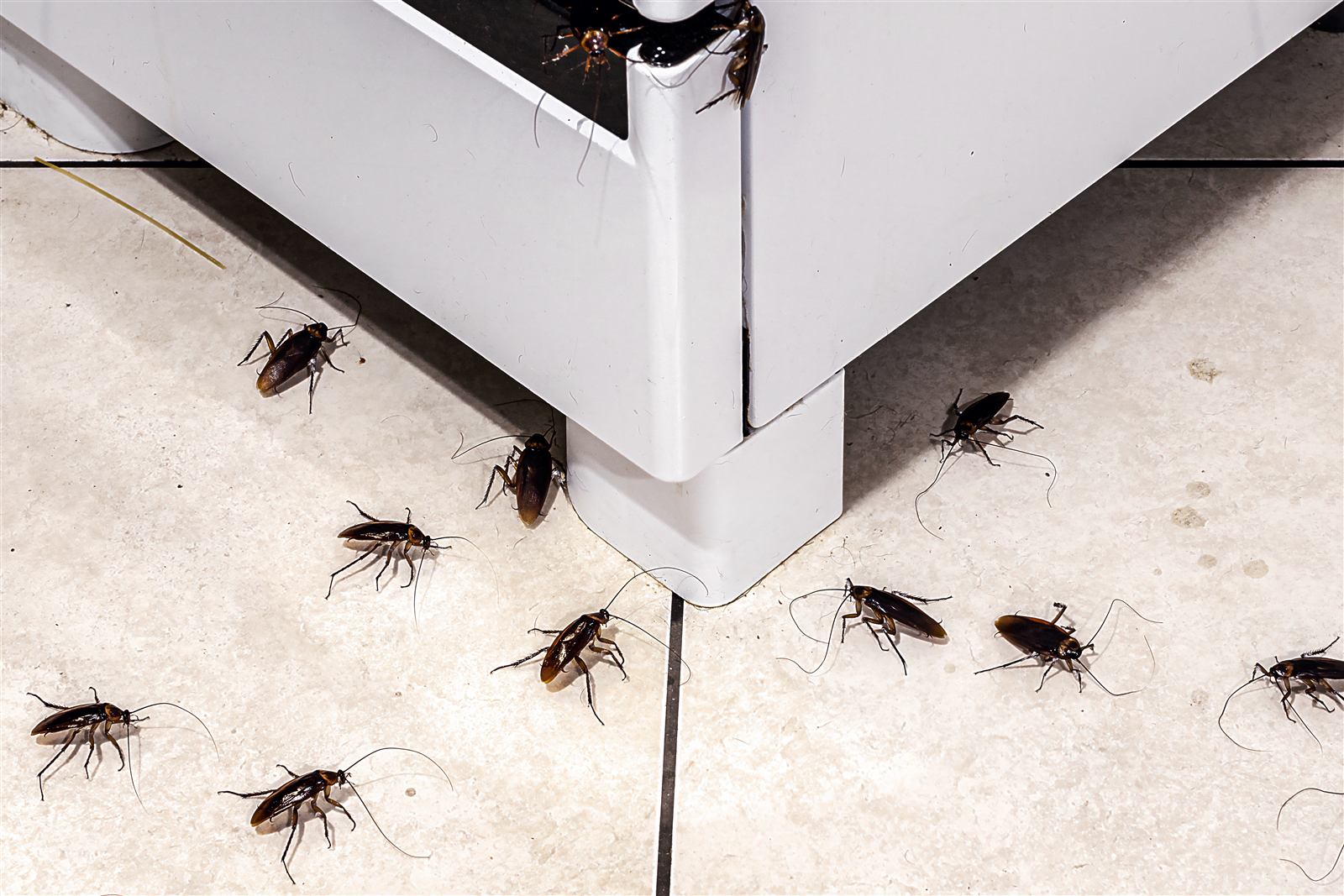
Can pest control get rid of roaches for good? The honest answer is yes, but only when the treatment targets the right species and includes a follow-up visit, since a single treatment rarely catches every egg case in a population on the first try. German cockroaches specifically are the reason so many people feel like roach treatment “doesn’t work,” not because professional cockroach control is ineffective, but because a treatment aimed at the wrong species, or a single visit with no follow-up, was never going to fully resolve a German cockroach population in the first place. Here is what actually determines whether roaches are gone for good, why German cockroaches specifically get singled out as the hardest species to eliminate, why follow-up visits matter more here than for most pests, and what a treatment plan built to last actually includes.
Cockroach Control Isn’t One-Size-Fits-All
Cockroach treatment gets sold and thought of as a single category more often than it should be. In reality, the four species most commonly found in Southern California homes and businesses, German, American, Oriental, and brown-banded cockroaches, differ enough in size, habitat, and behavior that a treatment built for one species can miss the others entirely. A German cockroach infestation concentrated behind a refrigerator responds to a very different approach than an American cockroach coming up through a drain from outside.
If a roach problem has already been treated once and the roaches are still showing up, there’s a good chance the treatment was aimed at the wrong species. Misidentifying which one is actually present is one of the most common reasons a homeowner ends up calling for a second visit, frustrated and increasingly convinced that “pest control just doesn’t work on roaches.” In most of these cases, the issue isn’t the concept of professional treatment. It’s a mismatch between the treatment applied and the species actually driving the infestation.
American and Oriental cockroaches, for comparison, behave quite differently from German cockroaches. Both are larger, tend to travel in from outside through drains, sewer connections, or gaps around plumbing, and don’t reproduce nearly as quickly indoors. A treatment plan built around excluding these species and addressing exterior entry points looks almost nothing like a plan built around eliminating an established, fast-reproducing German cockroach population concentrated behind a refrigerator, which is exactly why species identification has to come first.
Why German Cockroaches Are the Hardest to Fully Eliminate
The German cockroach is the species most commonly found indoors, especially in kitchens and bathrooms. It’s light brown with two dark parallel stripes running down the area just behind the head, and it reproduces faster than the other three species, which is exactly why an infestation can go from a couple of sightings to a real problem in a short amount of time. German cockroaches rarely travel far from a reliable food and water source, so once a population establishes itself near a kitchen, it tends to stay concentrated there rather than spreading evenly through the house.
German cockroaches reproduce faster than the other three species treated regularly in this region, and they tend to concentrate in tight cracks and crevices close to food and water, behind appliances, inside cabinet hinges, or along the underside of countertops. That combination of speed and hiding ability is what makes a partial treatment look like a failure a few weeks later. If even a small number of German cockroaches survive an initial treatment in a protected crack, the population can rebuild quickly.
This is also the species most associated with gel bait resistance in certain populations, which is part of why a single bait product that worked at a neighbor’s house doesn’t guarantee results at every property. Identifying the specific conditions and hiding spots on that property matters more with German cockroaches than with the other three species, and it’s part of why a generic, one-size-fits-all treatment plan struggles specifically with this species where it might work fine on a different one.
Gel bait resistance develops over time within specific populations exposed repeatedly to the same active ingredient, which is why professional treatment often rotates between different bait formulations and methods rather than relying on a single product indefinitely. A homeowner using the same over-the-counter bait repeatedly, without seeing lasting results, may actually be dealing with a population that has already developed some resistance to that specific product, which is a detail that’s easy to miss without professional monitoring over multiple visits.
Already Treated Once and Still Seeing Roaches?
Get a free inspection to confirm the species and find out what was actually missed.
Request a Free Inspection »Why Follow-Up Matters More With Roaches Than Most Pests
Follow-up matters more with cockroaches than with a lot of other pests, simply because a single treatment rarely catches every egg case in a German cockroach population. Egg cases, called oothecae, are protected and can survive a treatment that kills the adult roaches carrying them, which is why a second visit a few weeks later is often built into a proper cockroach plan rather than treated as a sign the first visit didn’t work.
An ootheca can be carried by a female roach for much of its development, tucked into a protected crevice, or deposited directly in a hidden location before hatching, and a treatment that eliminates every visible adult roach on the day of service can still leave behind several of these protected egg cases ready to hatch days or weeks later. A homeowner who sees no roaches for two weeks and assumes the problem is fully resolved, only to see a new wave of nymphs appear afterward, isn’t dealing with a failed treatment. They’re dealing with the normal reproductive cycle of German cockroaches specifically, which is exactly why the follow-up visit is a planned part of the process rather than an upsell.
The timing of a follow-up visit is calibrated around this reproductive cycle rather than an arbitrary interval. Scheduling the second visit too soon risks missing eggs that haven’t hatched yet, while waiting too long risks letting a new generation establish its own hiding spots and begin reproducing before the follow-up treatment can catch it. A professional plan accounts for this timing specifically, which is part of what separates a program built to actually finish the job from a single spray-and-hope visit.
Why German Cockroaches Get Extra Attention
There’s also a practical reason German cockroaches get singled out for extra attention beyond just their reproductive speed: they’re the species most commonly associated with allergy and asthma triggers in homes, since their shed skins and droppings accumulate wherever the colony concentrates. A property with a heavier German cockroach presence tends to benefit from addressing the infestation sooner rather than waiting to see if it resolves on its own, particularly in households with young children or anyone managing respiratory sensitivities.
This health angle is part of why “getting rid of roaches for good” matters beyond simple nuisance value. A German cockroach population left to grow unchecked doesn’t just become a bigger visual problem, it becomes a bigger source of allergen accumulation in exactly the areas, kitchens and food prep surfaces, where that accumulation matters most for a household’s day-to-day health.
Addressing Conditions, Not Just the Roaches Themselves
A treatment plan that only targets visible roaches without addressing what drew them in and let them establish a population in the first place tends to see the problem return, even with the right species correctly identified. Moisture sources, unsealed food storage, and clutter that creates hiding spots all need to be part of the conversation alongside the actual treatment application, since a property that continues offering the same food, water, and shelter a roach population needs is a property that remains vulnerable to a new infestation even after an existing one is eliminated.
Cockroach problems often show up alongside other pest concerns tied to the same moisture or clutter conditions. A property dealing with a cockroach infestation near a damp crawl space, for example, is also a reasonable candidate for a look at rodent activity, since both pests are drawn to similar entry points and conditions.
This is part of why an ongoing maintenance plan tends to work better than a single one-time visit for cockroach problems specifically. Regular monitoring catches a new egg case hatching or a fresh entry point being used well before it turns into a visible infestation again, which matters more for German cockroaches, given how quickly a small surviving population can rebuild, than it does for pests with slower reproductive cycles.
None of this should discourage anyone from pursuing professional treatment. If anything, understanding why roaches specifically require this multi-step approach, species identification, targeted treatment, a timed follow-up, and attention to underlying conditions, should build more confidence in the process, not less. A homeowner who understands what a proper cockroach plan actually involves is far better positioned to evaluate whether a quote they’ve received matches what actually resolves the problem, rather than assuming any treatment labeled “cockroach control” is equivalent to any other.
How Akela Approaches Cockroach Control
Professional pest control isn’t just a stronger version of what’s sold at the hardware store. It starts with a thorough inspection to identify pest entry points, nesting areas, and the specific species involved, since treatment for a German cockroach looks different than treatment for an American cockroach. From there, a customized plan addresses the underlying conditions that attracted the pest in the first place, not just the pest itself, using eco-friendly and pet-safe products throughout, with a follow-up visit built into the plan for German cockroach populations specifically, timed to catch any egg cases that survived the initial treatment.
Because cockroach problems and rodent problems often share the same damp, cluttered root conditions, an inspection triggered by a roach sighting is also a useful opportunity to check for rodent activity in the same kitchen, crawl space, or storage areas, since catching both during one visit tends to be more efficient than treating them as separate, unrelated calls.
See Our Full Cockroach Control Services
Get a free estimate and a real inspection to identify the species and build a plan that lasts.
See Cockroach Control »Pest control absolutely can get rid of roaches for good, but “for good” depends on correctly identifying the species involved, following through with the second visit that catches what the first one couldn’t, and addressing the underlying conditions that let a population establish itself in the first place. Skip any one of those three pieces, and even a well-executed treatment can look like it failed a few weeks later, when in reality it was only ever set up to handle part of the actual problem.
Frequently Asked Questions
Can pest control actually get rid of roaches permanently?
Yes, when the treatment correctly identifies the species involved, includes a follow-up visit to address egg cases, and addresses the underlying moisture and food conditions that let the population establish itself in the first place.
Why do German cockroaches keep coming back after treatment?
German cockroaches reproduce quickly and protect their egg cases, called oothecae, which can survive an initial treatment. This is why a follow-up visit a few weeks later is a planned part of a proper treatment plan, not a sign the first visit failed.
Does it matter which cockroach species I actually have?
Yes, significantly. German, American, Oriental, and brown-banded cockroaches differ in size, habitat, and behavior, and a treatment built for one species can miss the others entirely, which is a common reason a first treatment doesn’t fully work.
Are German cockroaches a health concern beyond being a nuisance?
Yes. German cockroaches are commonly associated with allergy and asthma triggers, since their shed skins and droppings accumulate wherever the colony concentrates, often in kitchens and food prep areas.
What else besides treatment actually keeps roaches from coming back?
Addressing moisture sources, sealing food storage, and reducing clutter that creates hiding spots are just as important as the treatment itself, since a property that still offers food, water, and shelter remains vulnerable to a new infestation.