
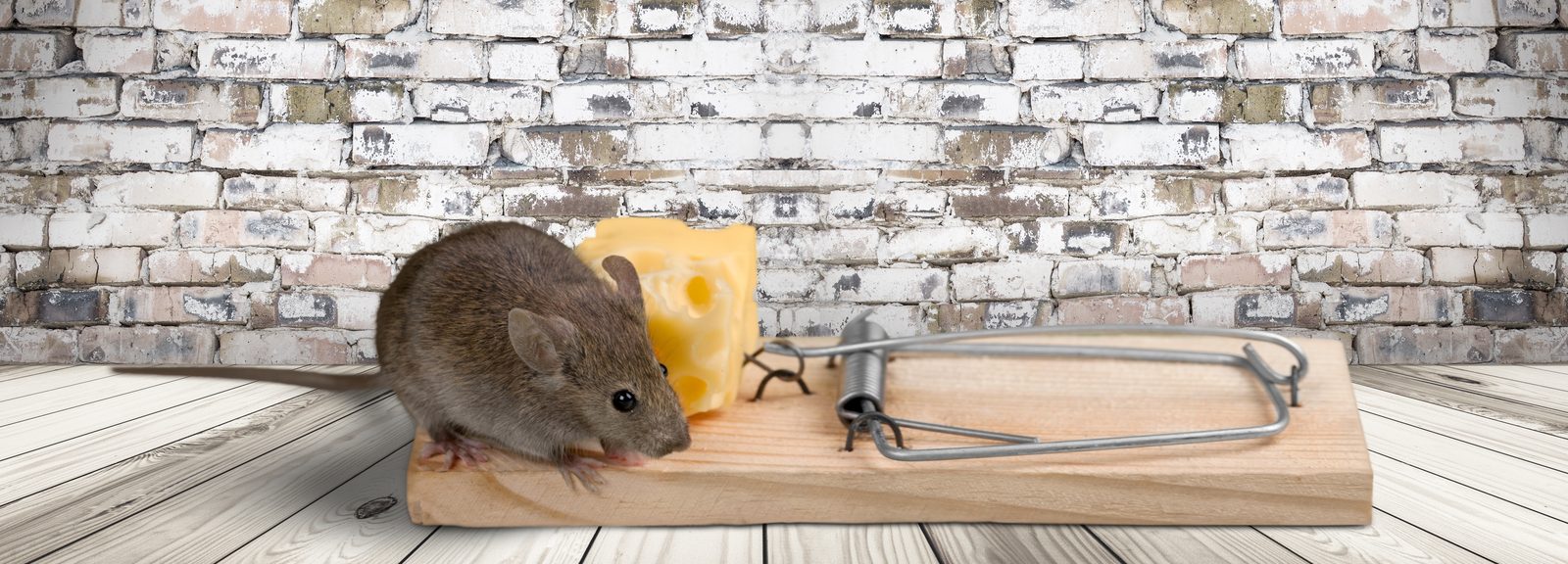
How do pest control get rid of mice? Most people picture a technician setting out bait and calling it done, but a real mouse program is exclusion-based, not bait-based, and bait alone rarely resolves a mouse problem for good. The actual process moves through inspection, targeted trap and monitor placement, exclusion work that physically seals the entry points mice are using, and a follow-up visit to confirm the population is gone rather than just quieter for a week. A mouse control program that skips the exclusion step is treating a symptom while leaving the door open, literally, for the next mouse to move in. Here is what actually happens at each stage of a real mouse program, why the sealing work matters more than the traps themselves, and why species identification changes every step along the way.
It Starts With Finding Out How Mice Are Actually Getting In
Before any trap goes down, a proper inspection identifies the signs of activity, droppings, gnaw marks, grease trails, nesting material, and traces them back toward the likely entry points a mouse is actually using. Since mice only need an opening about the size of a dime to get in, this inspection has to be thorough rather than a quick glance around the exterior, since a gap that small is genuinely easy to miss during a casual walk-around, even by someone specifically looking for it.
This inspection covers the interior and exterior both, checking baseboards, under-sink cabinets, garages, and attics where accessible for signs of activity, alongside a close look at the exterior perimeter for the specific dime-sized gaps around dryer vents, utility line penetrations, warped weep screeds, and worn garage door seals that let mice inside in the first place. Skipping this step and going straight to trap placement means guessing at where mice are entering rather than actually confirming it.
Signs of activity themselves tell a technician quite a bit about the extent of a problem before a single trap goes down. Fresh droppings versus old, dried-out ones suggest whether a population is actively present or if the signs are leftover from a previously resolved issue. Grease trails along baseboards, left behind by oily fur brushing repeatedly against the same surfaces, point toward a well-used travel path rather than a one-off visitor, which shapes exactly where the rest of the program focuses its attention.
Trap and Monitor Placement Comes Next
Once the inspection identifies likely activity zones and entry points, traps and monitoring devices get placed along the specific paths mice are actually using, close to walls and in the corners and protected spots mice favor when traveling through a space, rather than scattered generically throughout a property. This targeted placement is what separates a professional approach from a handful of store-bought traps placed wherever seems convenient at the time.
Monitoring devices serve a slightly different purpose than traps meant to catch mice immediately. They help confirm the extent of activity over the following days, which informs how aggressive the rest of the program needs to be. A property with light, contained activity calls for a different scope of continued work than one where monitoring reveals a more established population moving through several different zones of the structure.
Placement itself follows patterns that come from experience rather than guesswork. Mice tend to travel along walls rather than crossing open floor space, which is why effective trap placement runs perpendicular to a wall rather than out in the open, and why corners, behind appliances, and along baseboards tend to produce far better results than the center of a room. A technician who understands these travel patterns places far fewer traps far more effectively than a homeowner scattering traps wherever seems logical at a glance.
Already Tried Bait Alone and Still Have Mice?
Get a free inspection to find the entry points bait alone can’t fix.
Request a Free Inspection »Exclusion Is the Step Most People Don’t Know About
This is the part of the process most homeowners searching “how do pest control get rid of mice” don’t picture, but it’s genuinely the most important step for a lasting result. Exclusion means physically sealing the gaps, cracks, and access points mice are using, calibrated to the dime-sized standard specific to mice, using materials that hold up over time rather than a temporary plug that a mouse can chew through or dislodge within a matter of days.
Trapping removes the mice currently inside a structure, but exclusion is what stops new ones from getting in, and it’s the step that actually determines whether a mouse problem stays resolved after the initial visit. A property that gets thorough trapping without exclusion work will often see mice again within weeks or months, since the same entry point that let the first population in remains open for the next one. This is the single biggest reason a mouse program built around bait or trapping alone tends to disappoint homeowners expecting a permanent fix.
Exclusion materials matter too. A gap sealed with an inappropriate material, something a mouse can chew through easily, only buys temporary relief. Durable materials calibrated to actually resist gnawing are what separates exclusion work that holds up for years from a quick patch that needs redoing within a single season.
The scope of exclusion work varies considerably from one property to the next. A property with a single, easily accessed entry point around a dryer vent needs a relatively quick fix once identified. A property with multiple active entry points across different sides of the structure, or gaps that are harder to reach, behind landscaping or high on a roofline, takes considerably more time and material to properly close. This variation is part of why a real inspection has to happen before exclusion work can even be scoped accurately, let alone priced.
Getting the Species Right Changes Every Step
This species-specific approach is exactly why accurate identification matters before exclusion work starts. Sealing every gap on a property doesn’t help much if the actual entry point is a dime-sized gap around a dryer vent that got missed because the inspection assumed rats rather than mice. The reverse is just as true: focusing exclusively on small gaps while ignoring a larger foundation crack leaves the door open, literally, for a rat even after a mouse problem gets resolved, undoing the whole point of the exclusion work in the first place.
House mice, Norway rats, and roof rats all leave somewhat different signs and prefer different parts of a structure, which means a technician confirming exactly which species is present shapes every subsequent step, from where traps get placed to what size gap the exclusion work needs to target. A program built around the wrong species assumption can look thorough on paper while missing the actual access point entirely.
Newer construction, with tighter seals and fewer obvious entry points, tends to see house mice more often than rats specifically, since a dime-sized gap is far more common in modern building materials than the larger openings a rat needs. Older homes with more gaps, aging foundations, and established crawl spaces tend to give larger rodents like Norway rats and roof rats easier access as well, which is a useful piece of context when confirming which species is actually the more statistically likely culprit before an inspection even begins in earnest.
Follow-Up Confirms the Job Actually Worked
A single visit rarely represents the complete process, since confirming a mouse population is fully resolved, rather than just quieter in the days immediately following treatment, takes a follow-up check. This visit reviews monitoring devices, checks whether trapped mice indicate the population has been fully addressed, and verifies that sealed entry points are holding up as expected.
This follow-up step is part of why a program described as “one visit and done” tends to set the wrong expectation from the start. Mice can take some time to fully clear from a structure even after entry points are sealed, and monitoring that continues past the initial visit is what actually confirms a resolved problem rather than assuming it based on a quiet week.
A follow-up also gives a technician the chance to check whether the sealed entry points have held up under real-world conditions, weather, settling, or any incidental disturbance since the initial visit, rather than assuming the exclusion work is permanent simply because it looked solid on the day it was completed. Catching a seal that has already started to loosen during a scheduled follow-up is considerably better than discovering it months later when mice have found their way back in through the exact same spot.
Understanding this full process is useful even for a homeowner who plans to attempt some of it themselves before calling a professional. Setting a few traps without ever checking for the entry point mice are actually using is a common reason DIY efforts stall out after initial success: the traps catch the mice present at the time, but nothing stops the next one from wandering in through the same unaddressed gap a week or a month later, restarting the whole cycle from scratch.
How Akela Approaches Mouse Control
We use a humane approach with traps and exclusion techniques that prioritize animal well-being without unnecessary harm, built on years of experience identifying rodent activity across Riverside and the surrounding areas. Every visit starts with a thorough inspection to determine which species is actually present, how established the population is, and exactly where it’s getting in, followed by a customized plan that includes real exclusion work, not just trapping. Products and methods are eco-friendly and safe for families and pets, every estimate is free before any work begins, and there are no contracts required, ever, with a follow-up built into the process rather than treated as an optional extra.
Because the same warm, cluttered, moisture-prone conditions that draw mice into a property often draw other pests too, a mouse inspection sometimes turns up signs of cockroach activity in the same areas, particularly around damp crawl spaces or cluttered garages, which is worth flagging during the same visit rather than waiting for a separate complaint down the road.
See Our Full Rodent Control Services
Get a free estimate and a real process built around exclusion, not just traps.
See Rodent Control »Getting rid of mice for good is a process, not a single visit: inspection to find the real entry points, targeted trap and monitor placement, exclusion work that actually seals the access mice are using, and a follow-up to confirm it worked. Skip the exclusion step, and even a thorough trapping effort is only ever a temporary fix, no matter how many mice were caught in the first round.
Frequently Asked Questions
How do pest control companies actually get rid of mice?
The process includes an inspection to find entry points, targeted trap and monitoring placement, exclusion work to physically seal gaps mice are using, and a follow-up visit to confirm the population is resolved.
Is bait enough to get rid of mice on its own?
No. Bait and trapping remove the mice currently present, but exclusion, sealing the entry points, is what prevents new mice from getting in and is the step that actually determines whether the problem stays resolved.
How small of a gap can mice actually use to get inside?
Mice only need an opening about the size of a dime, which is why a thorough inspection matters more than a quick exterior glance when trying to find the actual entry point.
Why does it matter if it’s mice versus rats?
Mice and rats require different exclusion material sizes and prefer different parts of a structure, so a program built around the wrong species can miss the actual entry point entirely, even if it looks thorough on paper.
Why is a follow-up visit part of the process?
A follow-up visit confirms the population is actually resolved and that sealed entry points are holding up, rather than assuming success based on a quiet week immediately after the first visit.